
Most homeowners never actually see the termites eating their home. The workers stay hidden deep inside the wood, the colony operates in the dark, and the damage accumulates silently over months and years. But every so often, a wall gets opened, a baseboard gets pulled away, or a piece of damaged wood gets disturbed, and what’s inside becomes visible.
If you’ve cracked open a piece of infested wood or disturbed a wall cavity and seen small, pale, almost translucent insects scrambling for cover, those are almost certainly baby termites, the immature members of an active colony. Their presence confirms something important: the infestation is not new, it’s established, and the colony inside your walls is actively growing.
Here’s what baby termites actually are, what they look like, what their presence means for your home, and what you should do next.
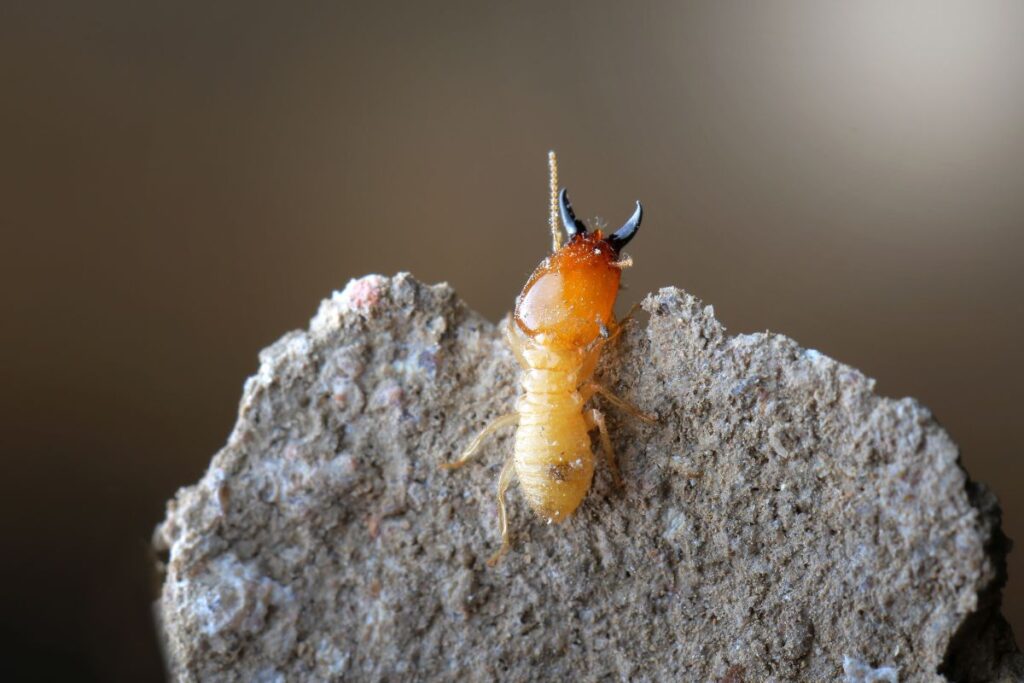
In termite biology, there are no true larvae in the way you might think of a caterpillar or grub. Termites hatch from eggs as nymphs, which are small, immature versions of the adult caste they’ll eventually become. These nymphs go through a series of molts, gradually growing and developing into workers, soldiers, or reproductives depending on the needs of the colony.
When people refer to baby termites, they’re typically talking about one of three things: newly hatched nymphs that are barely visible to the naked eye, young worker termites that haven’t yet reached full size, or termite eggs, which are tiny, oval, and clustered together in a chamber within the gallery system.
All three indicate the same thing: there is a functioning, reproducing colony in or very near the wood where you found them. Termite queens can lay thousands of eggs per year, and a mature colony contains individuals at every stage of development simultaneously. Seeing the small ones just means you happened to disturb a section of the gallery where younger members of the colony were concentrated.
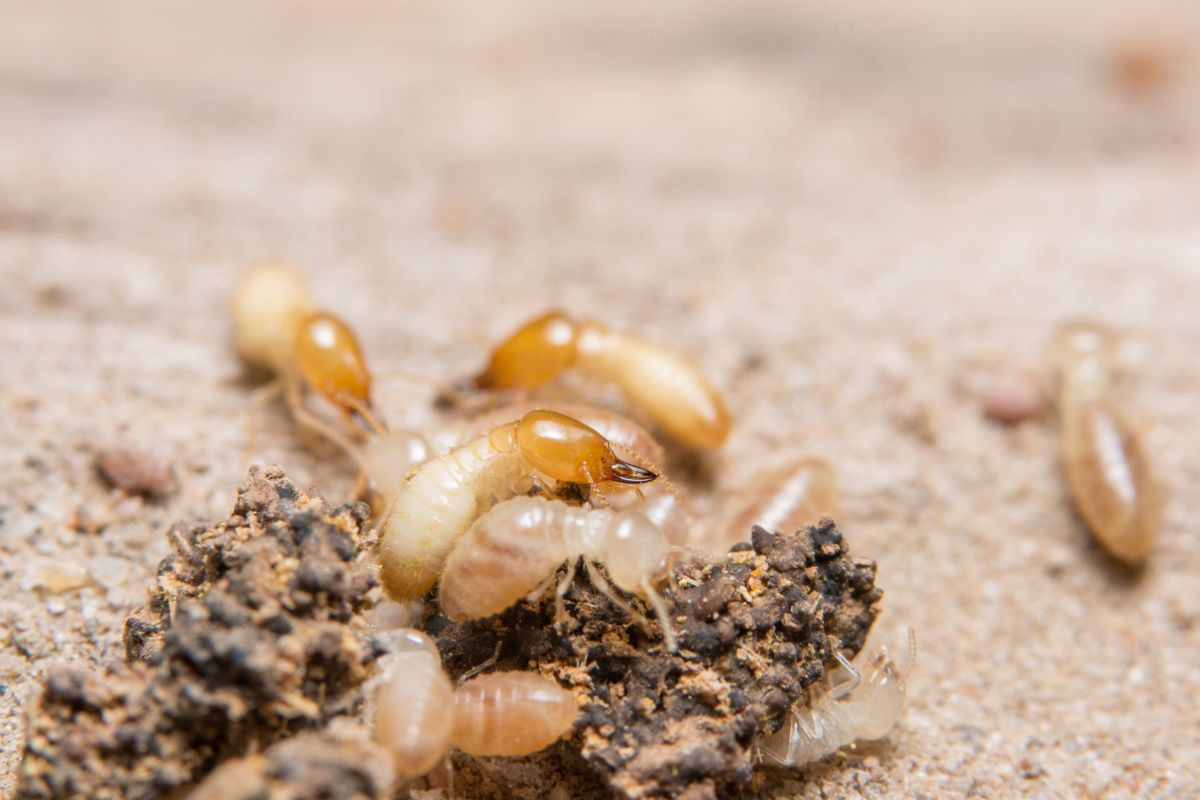
Young termite nymphs are almost white or very pale cream in color. They have very little pigmentation at early stages of development, which gives them a soft, almost translucent appearance. Worker termites, which make up the vast majority of what you’d see in an infested piece of wood, retain this pale coloration throughout their lives since they spend their entire existence inside the dark gallery system and never need to develop the darker cuticle that exposed insects use for UV protection.
If you see pale white or cream-colored insects that look almost ghost-like, those are almost certainly termite workers or nymphs. This coloration is one of the most reliable visual identifiers.
Newly hatched termite nymphs are extremely small, roughly one to two millimeters in length, barely visible without magnification. As they molt and develop, they grow gradually, with mature workers reaching about three to four millimeters for most common species found in Southern California. For context, a mature worker termite is roughly the size of a grain of rice, and young nymphs are noticeably smaller than that.
Termites have a straight, tube-like body with no pinched waist, which distinguishes them from ants at every life stage. Even the youngest nymphs have this characteristic straight profile. They have six legs, short straight antennae that look like a string of tiny beads, and a soft abdomen that appears slightly rounded. Their head is slightly darker than the rest of the body, often a pale yellow or tan, while the body remains nearly white.
Termite eggs are even smaller than the newly hatched nymphs. They look like tiny white or slightly translucent oval pellets, roughly the size of a pinhead, and are found clustered together in a chamber within the gallery system. If you break open a section of infested wood and find a dense cluster of what looks like tiny white grains of rice all packed together, you’ve found an egg chamber. This is a definitive sign of an actively reproducing colony.
White or pale insects found inside wood are sometimes confused with each other, and getting the identification right matters for treatment purposes.
Woodlice, sometimes called pill bugs or roly-polies, are crustaceans, not insects, and have a clearly segmented, armored body that looks nothing like the smooth, pale body of a termite nymph. They’re also much larger than young termite nymphs and don’t live inside wood galleries.
Book lice are extremely small pale insects that feed on mold and organic material. They’re often found in damp areas and can look superficially similar to termite nymphs at a glance, but they have a distinctly different head shape, longer antennae, and are typically found in humid environments like pantries or basements rather than inside dry wood galleries.
Ant larvae are legless and grub-like, with a curved, c-shaped body. They look nothing like termite nymphs, which have six legs and a straight body from the moment they hatch. If the pale insects you found have legs and a straight body, they’re termites, not ant larvae.
This is the question that matters most for a homeowner. Finding baby termites isn’t just evidence that termites are present. It’s evidence of a specific stage of infestation.
A termite colony doesn’t begin producing large numbers of eggs and nymphs immediately after establishment. The queen starts laying eggs soon after the colony is founded, but it takes time for the population to grow to the point where you’d encounter nymphs and eggs in significant numbers during a casual inspection. Finding them in accessible areas of your home means the colony has been active long enough to establish, grow, and spread its gallery system into that section of the structure.
It also means the colony is actively reproducing, which indicates it’s in a healthy growth phase. A growing colony will continue to expand its territory and consume more wood as long as it isn’t treated.
The practical takeaway is that baby termites are not an early warning sign. They’re a mid-to-advanced stage indicator. If you’re seeing them, a professional termite inspection isn’t something to schedule for next month. It’s something to schedule this week.
Because termite nymphs are the most vulnerable members of the colony, they’re typically kept in the interior sections of the gallery system, away from entry points and environmental exposure. The areas where you’re most likely to encounter them when wood is disturbed include:
The location where you find them can also give the inspector useful information about where the primary colony chamber is relative to what you’ve observed, since worker termites generally stay close to the gallery center unless foraging for new food sources.
The short answer is no, and it’s not just about whether a DIY product would work. It’s about the diagnostic opportunity.
When you disturb a colony and see the nymphs scatter, the instinct is to spray whatever you have available. But store-bought termiticide sprays applied to the surface of a gallery don’t reach the colony center, don’t address the queen, and don’t stop the feeding that’s happening throughout the rest of the gallery system. At best, you kill a small fraction of the worker population and the colony replaces them within weeks. At worst, you disrupt the colony enough that it relocates deeper into the structure, making it harder to locate and treat.
What you should do instead is document what you found, note the exact location, and contact a licensed termite professional. MEC’s complete termite control service is designed specifically to address established colonies like the one you’ve found: identifying the full extent of the infestation, selecting the right treatment method for the species and scope, and following up to confirm eradication.
Treating the colony stops the feeding, but it doesn’t undo the damage the colony has already done. Wood that’s been hollowed out, galleries that have compromised structural members, and any areas where the termites have been eating for an extended period will need to be assessed and repaired after the treatment is complete.
MEC handles this through our termite damage remodeling and restoration service. Rather than leaving you to find a separate contractor after the pest work is done, we manage the full process from treatment through structural repair, drywall patching, texture matching, and finish painting. One company, one point of contact, and a home that’s structurally sound and visually restored when the job is finished.
If you’ve disturbed a section of wood in your home and found pale, small insects scrambling inside, don’t wait to find out what they are. The longer an established colony feeds, the more structural wood it consumes and the more extensive the eventual repair work becomes.
MEC Termite & Pest Control offers free termite inspections for Garden Grove and Orange County homeowners. Our licensed technicians will identify the species, map the extent of the infestation, and give you a clear treatment plan with transparent pricing.
Call us at 714-951-4015 or contact us online to get your free inspection scheduled. We’ve been doing this in Garden Grove for over 27 years and we’ll tell you exactly what you’re dealing with.