
Termite damage is one of the most misunderstood problems in homeownership. People picture eaten-through beams or caved-in floors, but the reality is far more subtle, at least in the early and middle stages. Most termite damage looks like something else entirely: water stains, paint bubbling, a sticky door, a soft spot in the floor you keep meaning to look at.
That’s what makes termites so costly. By the time the damage is undeniable, the colony has often been active for a year or more. Understanding what termite damage actually looks like, at every stage, is one of the most practical things a Southern California homeowner can know.
Here’s a thorough, room-by-room breakdown of what you might find and what it means.
Wood is where termites do their work, and the visual signs on wood surfaces are the most direct evidence of their presence. The appearance varies depending on the species involved.
Subterranean termites eat along the grain of the wood, hollowing out the soft inner layers while leaving the harder outer layers relatively intact at first. If you cut into a piece of wood damaged by subterranean termites, you’ll see a honeycombed interior packed with soil and debris. The galleries they carve run parallel to the grain and have a distinctive muddy or dirty appearance inside.
On the surface, the wood may look discolored, slightly sunken, or wavy. Pressing a finger or screwdriver into the surface of a damaged piece can cause it to break through with very little resistance, like pushing into wet cardboard.
Drywood termites don’t follow the grain as strictly. They excavate chambers across and along the grain, creating a more open, smooth-walled gallery system. These galleries look clean compared to the soil-packed tunnels of subterranean termites. The wood has a thin shell on the outside, and when you tap it, it produces a hollow, papery sound.
The exterior surface of drywood-damaged wood often shows small circular holes, which are the kick-out holes termites use to push frass out of the gallery. Beneath those holes, you’ll typically find small piles of pellet-shaped droppings that look like sawdust or coffee grounds.
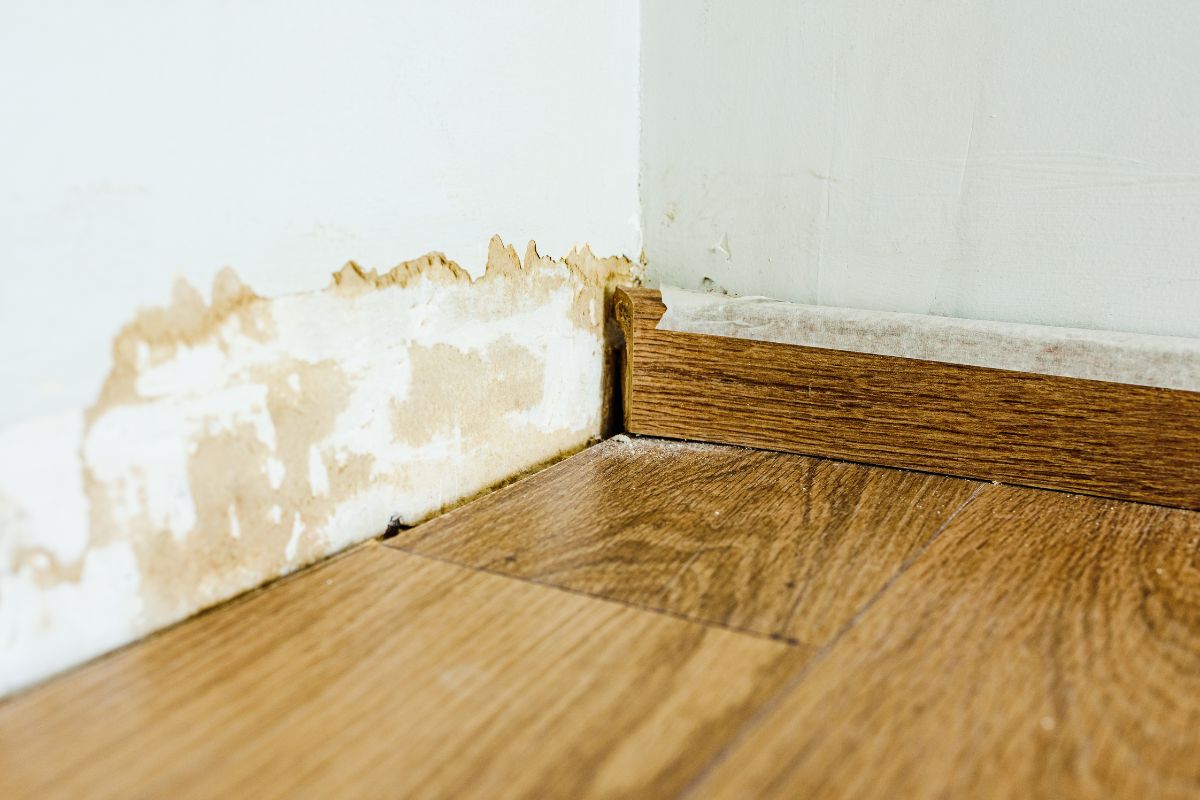
Wall damage is the most commonly missed category because it’s hidden. You won’t see it during a normal walk-through of your home. But there are surface signs that point to what’s happening inside.
If you notice any of these, the concern is real. Drywood termites often establish colonies in the wall framing behind drywall, while subterranean termites can tunnel up through the wall cavity from the foundation. In both cases, the visible wall surface is usually the last thing to show damage, meaning the structural elements behind it may already be significantly compromised.
When wall framing is affected, the repair process typically involves opening the wall, treating any remaining termite activity, replacing damaged studs or blocking, and then patching and refinishing the drywall. MEC handles this entire process through our termite damage remodeling service, so homeowners don’t have to coordinate between a pest company and a separate contractor.
Floor damage from termites tends to show up in a few specific ways, and it’s often described by homeowners as something that just feels off before it looks like anything obvious.
Subterranean termites are the primary culprit for floor damage because they travel up from the soil into the subfloor system. In homes with crawl spaces, they have easy access to the underside of the floor joists and decking. Once the subfloor is compromised, it can no longer support the finished floor above it properly, which is why you get the soft spots and warping.
Subfloor repair after termite damage is one of the more involved restoration jobs because it requires pulling up the finished flooring, assessing the subfloor and joists, replacing what’s been damaged, treating the area, and then reinstalling the surface material. You can see how MEC approaches this through our wood repair and structural restoration service.
Window and door frames are some of the most vulnerable spots in any home. They’re made of wood, they’re often at or near ground level, and they frequently have small gaps or cracks where moisture can accumulate. All of this makes them attractive entry and feeding points for both termite species.
The most common signs of frame damage include doors that suddenly won’t close properly or that stick in the frame, windows that were easy to open and now require force, frames that look slightly warped or uneven along the edge, and wood around the frame that crumbles or flakes when touched.
Because door and window frames are structural elements that also affect weather sealing and security, damage here needs to be addressed promptly. A frame that’s been hollowed out by termites can no longer hold a door or window properly, and the compromised wood can allow moisture infiltration that leads to additional problems over time.
The attic is one of the most common locations for drywood termite colonies in Southern California homes. It’s warm, dry, has abundant wood in the form of rafters and trusses, and is rarely inspected. Colonies can establish there and grow for years before any sign appears in the living space below.
In the attic, termite damage looks like:
Attic inspections are a standard part of a thorough termite evaluation. If you haven’t had your attic looked at by a professional in the past few years, it’s one of the most important checks you can make for a home in this region.
This is the question most homeowners want answered when they discover damage, and the honest answer is that it depends on where the damage is. Surface damage to decorative trim or non-structural wood is a cosmetic issue. Damage to load-bearing elements like rafters, floor joists, wall studs, sill plates, or beams is a structural issue that can affect the safety of the home.
The tricky part is that termites don’t advertise which elements they’ve chosen. A colony in a non-structural rafter may not be dangerous on its own, but the same colony three joists over could be affecting a primary load-bearing member. This is why professional assessment matters so much after any suspected termite damage. Visual surface signs alone can’t tell you how far into the structure the damage has gone.
Treating the termites is step one. What many homeowners don’t fully anticipate is that the wood damage remains even after every termite in the colony is dead. The structural integrity that’s been lost doesn’t come back on its own. Hollow wood stays hollow. Compromised joists stay compromised.
This is where termite damage remodeling and restoration comes in. At MEC, we don’t just treat the infestation and leave you to find a contractor. Our team handles the full process, from the pest control through the structural repairs and the finish work, including drywall patching, texture matching, painting, and wood replacement. It means one point of contact, coordinated scheduling, and a home that looks and performs the way it should when the job is done.
If you’ve noticed any of the signs described above and you’re not certain what you’re dealing with, the right move is to get a professional set of eyes on it. A trained technician can distinguish termite damage from water damage, rot, and normal settling in a way that a visual inspection on your own usually can’t.
MEC Termite & Pest Control offers free inspections for Garden Grove and Orange County homeowners. Call us at 714-951-4015 or contact us online to schedule yours. We’ll tell you exactly what we find and what the best path forward looks like.
You can also explore our full range of termite and pest control services to understand everything we offer under one roof.