
One of the first questions homeowners ask after a termite diagnosis is a practical one: how long is this going to take? The honest answer is that it depends almost entirely on which treatment method is right for your situation. A localized spot treatment can be completed in a single morning. A whole-structure fumigation requires you to vacate your home for several days. A soil barrier falls somewhere in between.
Understanding the timeline for each method before you commit to one helps you plan appropriately, set realistic expectations, and make sure the treatment fits your household’s schedule. Here’s a clear breakdown of what each approach actually involves and how long it takes from start to finish.
Termite treatment isn’t a single procedure. It’s a category that includes several distinct methods, each designed for a specific species, infestation size, and structural situation. A drywood termite colony confined to one window frame requires a completely different approach than a widespread subterranean infestation spreading through a home’s foundation and floor system.
The three primary treatment methods used for residential termite infestations in Southern California are localized spot treatment, soil barrier treatment, and whole-structure fumigation. Each has its own timeline, preparation requirements, and post-treatment considerations.
Spot treatment is the most targeted option, used when a drywood termite infestation is confined to a specific, accessible section of wood. The technician drills small access holes into the infested wood, injects termiticide directly into the gallery system, and seals the holes after treatment. You can read more about this approach on our termite treatment service page.
The treatment itself typically takes between one and three hours depending on the number of access points, the size of the infested area, and how easily the technician can reach the affected wood. For a single window frame or a small section of attic rafter, one hour is a reasonable estimate. For a more extensive but still localized infestation covering several connected areas, the work might extend to a half day.
There is no waiting period before re-entering treated areas. The termiticide is injected directly into the wood gallery and the access holes are sealed immediately after treatment, so there’s no airborne residue to wait out. You can continue using your home normally as soon as the technician leaves.
Spot treatment works best when the inspection confirms that the infestation hasn’t spread beyond one or two isolated areas. It’s the least disruptive option and the most cost-effective when the scope of the problem genuinely supports it. The key word is genuinely. A spot treatment applied to one visible area when the colony has already spread to multiple sections of the structure will not resolve the infestation. This is why the inspection that precedes treatment is so important.
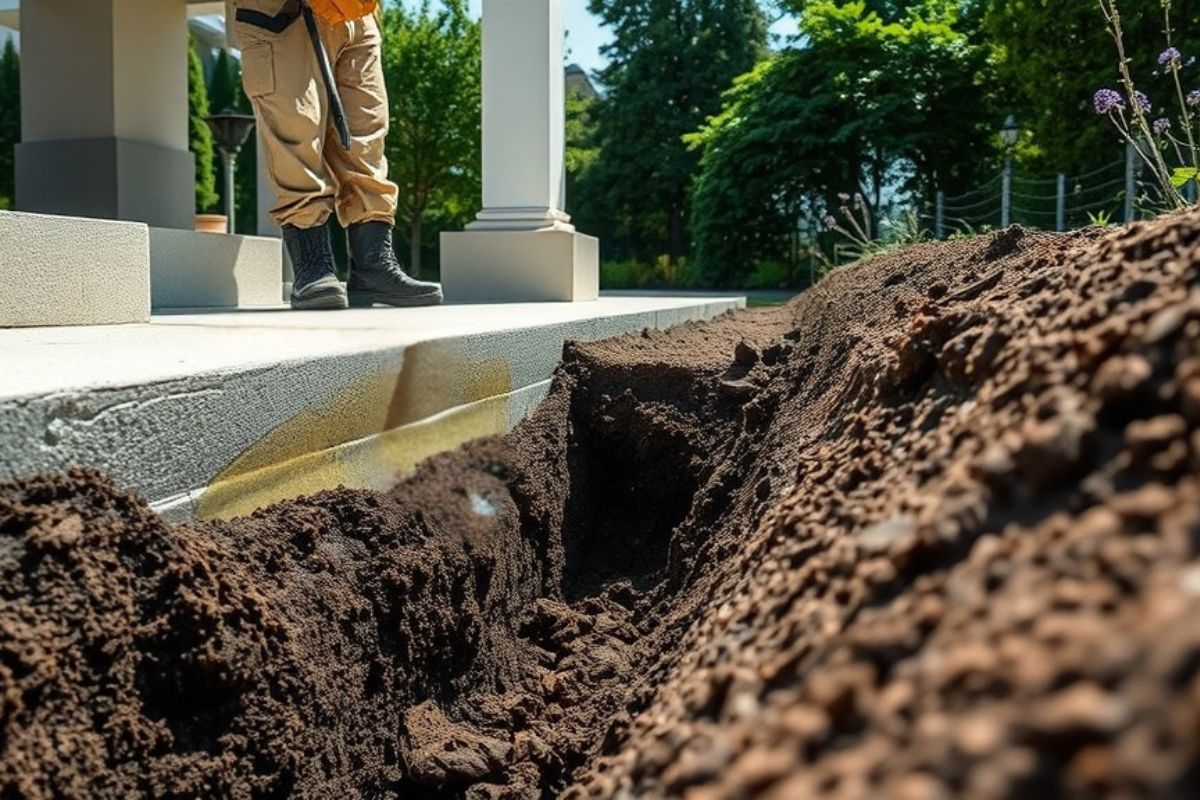
Soil barrier treatment is the primary method for subterranean termite infestations. A liquid termiticide is applied to the soil around and beneath the home’s foundation, creating a treated zone that workers pass through as they travel between the colony and the wood above. The product is carried back to the colony through contact, eventually reaching and eliminating the queen and collapsing the population.
The application itself takes between two and four hours for most standard residential properties. The technician trenches along the foundation perimeter, applies the termiticide at the correct concentration and depth, and backfills the trench. In homes with concrete flatwork, slabs, or interior foundation walls, additional drilling may be required to reach the soil beneath, which can extend the application time.
You don’t need to vacate your home during a soil barrier treatment. The termiticide is applied to the exterior soil and any necessary interior soil access points, not into the living space itself. You may need to stay out of the treated trench area while it’s being backfilled, but normal home use continues throughout.
The treatment begins working immediately in the sense that termites contacting the treated soil are affected right away. However, full colony elimination takes longer because it depends on workers carrying the product back to the colony center over time. Expect to see a significant reduction in termite activity within a few weeks, with complete colony collapse typically occurring within one to three months depending on colony size.
Soil barrier treatment is the appropriate response to a confirmed subterranean termite infestation. It’s also used proactively as a preventive measure in high-risk properties. If the inspection finds mud tubes, active subterranean feeding, or evidence of previous subterranean activity, a soil barrier is almost always part of the treatment plan.
Fumigation, sometimes called tenting, is the most comprehensive termite treatment available. The entire home is sealed under a tent and filled with a gas that penetrates all wood throughout the structure, eliminating every termite colony present regardless of location or accessibility. It’s the only method that can guarantee complete eradication of a widespread drywood infestation. Our termite fumigation service page covers the full process in detail.
Fumigation is a multi-day process. Here’s how the timeline typically breaks down:
From start to re-entry, plan for a minimum of two nights away from your home and more commonly three nights. For larger homes or in cooler weather, four nights is not unusual. You’ll need to arrange alternative accommodations for yourself, your family, and any pets for the full duration.
Fumigation requires more preparation than any other termite treatment method. Before the tent goes up, you’ll typically need to:
MEC walks every homeowner through the complete preparation checklist before scheduling fumigation so nothing gets missed and the process goes smoothly.
Fumigation is the right choice when the inspection reveals that drywood termites have spread to multiple areas of the structure, when colonies are present in areas that can’t be accessed for spot treatment, or when a previous localized treatment hasn’t fully resolved the infestation. It’s the definitive solution for a widespread drywood problem and the method that provides the most complete eradication.
The right treatment depends on what the inspection finds. Species, colony location, extent of spread, and structural access all factor into the recommendation. A drywood infestation caught early in one accessible area is a strong candidate for spot treatment. A drywood infestation found in multiple areas of an older home is almost certainly a fumigation situation. A subterranean infestation requires a soil barrier regardless of how widespread it is.
This is why the inspection is the essential first step. MEC’s licensed technicians don’t recommend a treatment method until they’ve fully assessed the infestation. You can learn more about our full range of termite control options and what each one involves before your inspection appointment.
Treatment eliminates the termites. It doesn’t undo the damage they’ve already caused. Any wood that’s been structurally compromised during the infestation still needs to be assessed and repaired after treatment is complete.
MEC handles this through our termite damage remodeling and restoration service. We manage the full process from pest control through structural wood repair, drywall patching, texture matching, and finish work, so you don’t have to coordinate between a pest company and a separate contractor. One team, one timeline, one point of contact.

Before any treatment timeline starts, the inspection comes first. MEC Termite & Pest Control offers free termite inspections for Garden Grove and Orange County homeowners. Our licensed technicians will identify the species, locate the infestation, assess the extent of any damage, and recommend the right treatment method for your specific situation.Call us at 714-951-4015 or contact us online to schedule your free inspection. We’ll give you a clear treatment timeline, honest pricing, and a plan that actually fits your home and your schedule.