
Drywood termites are the most destructive wood-eating insects in Southern California. Unlike their subterranean cousins, which tunnel through soil and only visit wood to feed, drywood termites live inside the wood itself — consuming structural members from the inside out, often for years before any visible signs appear.
At MEC Termite & Pest Control, we’ve been treating drywood termite infestations throughout Garden Grove and Orange County for over 27 years. We’re a family-owned, licensed, and certified company, and we specialise in identifying drywood activity early and eliminating it completely with treatments that are right-sized for your property.
Drywood termites are a distinct species found exclusively in warm, dry climates like Southern California. They’re smaller than subterranean termites — about the size of a grain of rice — but they’re far more destructive on a per-termite basis because they infest solid wood structures.
Key differences from subterranean termites:
The danger with drywood termites is that they can work undetected for years. By the time you notice the signs, significant structural damage may have already occurred.
Drywood termites are a distinct species found exclusively in warm, dry climates like Southern California. They’re smaller than subterranean termites — about the size of a grain of rice — but they’re far more destructive on a per-termite basis because they infest solid wood structures.
Key differences from subterranean termites:
The danger with drywood termites is that they can work undetected for years. By the time you notice the signs, significant structural damage may have already occurred.
Unlike subterranean termites, which leave visible mud tubes, drywood termites are experts at hiding. However, there are telltale signs that indicate their presence. Watch for:
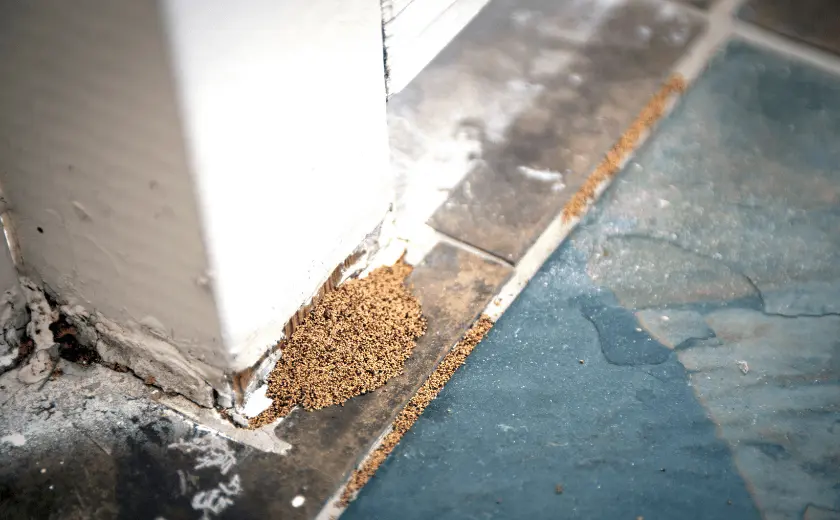
The most obvious sign of drywood activity is frass — tiny pellets of wood-coloured material found near infested wood, often near windows, baseboards, or floor corners. Drywood termites push their droppings out of their galleries, so you might find little piles of frass below entry holes.
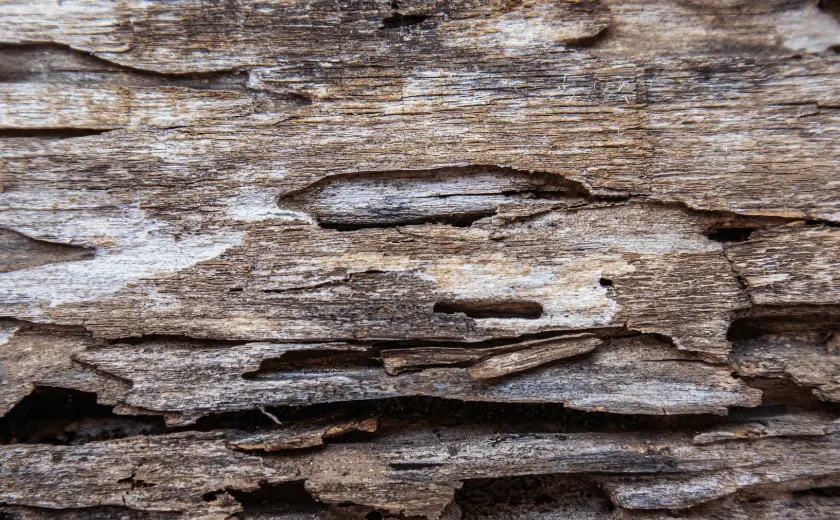
Wood infested with drywood termites sounds thin or papery when tapped. Look for blistering paint on wood surfaces, soft spots, or wood that feels spongy — all signs that termites are eating it from the inside.
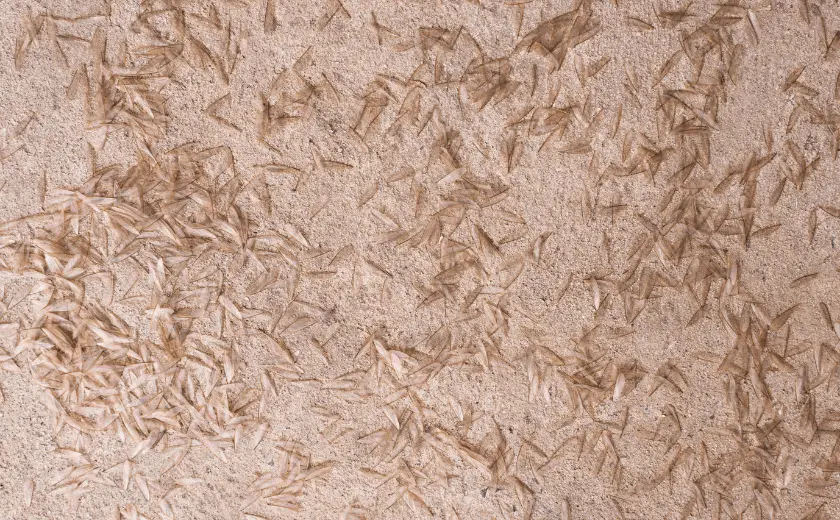
During swarming season (late spring and summer in Southern California), drywood termites develop wings and swarm to find new places to nest. You might find discarded wings near windows or entry points after a swarm.
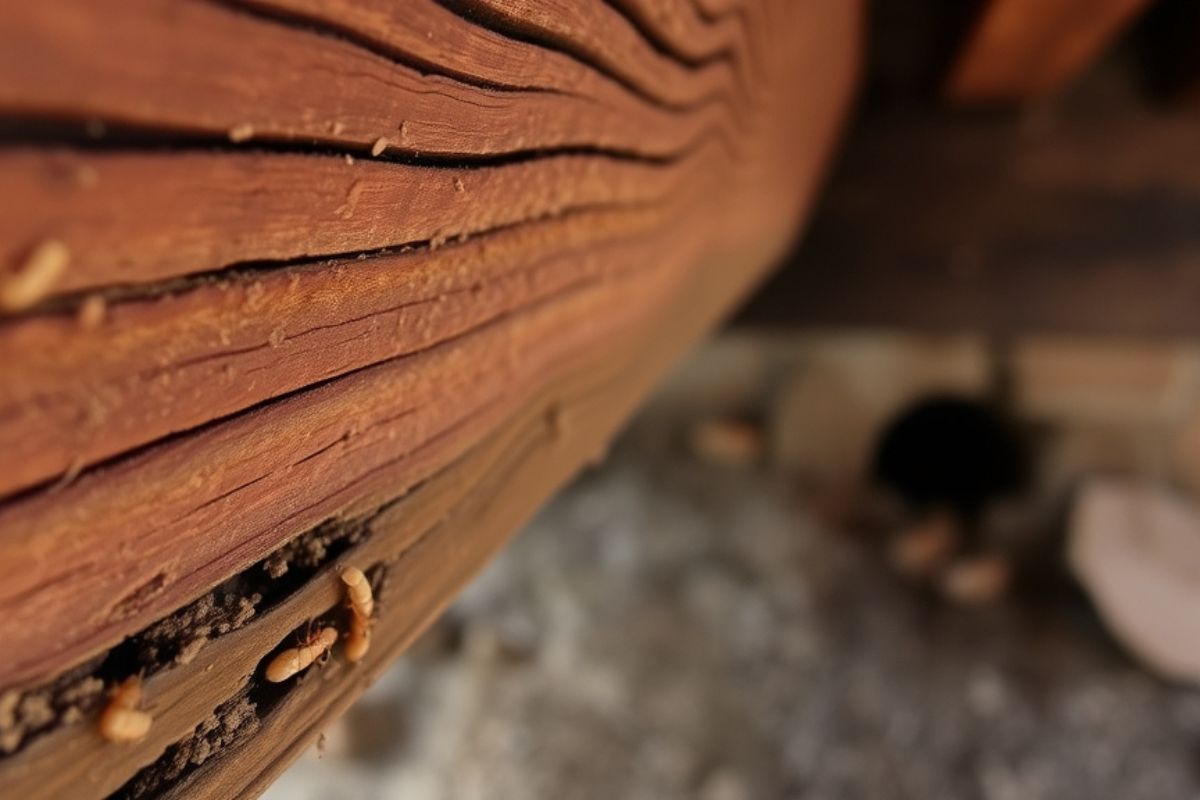
Drywood termites create tiny, round entry holes in wood — about the diameter of a ballpoint pen. These may be sealed or open, and they’re easy to miss if you’re not looking closely.
If you notice any of these signs, don’t wait. Call us at 714-951-4015 or schedule a free termite inspection right away.
Once the termites are gone, the work isn’t finished. If they’ve caused structural damage, you’ll need repairs. MEC handles that too.
We offer full termite damage repair and remodeling services, including wood replacement, drywall repair, and structural restoration. We use pre-treated, borate-infused lumber that resists future termite activity.
Because we handle both the pest control and the repair under one roof, the process is faster, more coordinated, and more cost-effective than hiring separate contractors.
The right treatment for drywood termites depends on how widespread the infestation is. Our licensed technicians will recommend the approach that makes sense for your property.
If the infestation is confined to one or a few areas, we use targeted spot treatments. We inject eco-friendly solutions directly into the affected wood, eliminating the colony without disrupting the rest of your home.
For infestations that have spread to multiple areas, fumigation is the most thorough solution. We tent your home and treat it with a gas that penetrates every cavity and void, eliminating 100% of the termite population.
During your free inspection, we’ll assess the extent of the infestation and recommend which approach will work best.
Once we’ve eliminated an infestation, the best way to prevent a new one is with a termite prevention plan. We’ll schedule regular inspections and you’ll get priority response if any new activity is detected.
In addition to professional prevention plans, you can reduce risk by maintaining good property habits — removing dead wood piles, avoiding wood-to-soil contact, fixing moisture issues, and trimming tree branches that touch your roof.
We provide professional drywood termite inspection, treatment, and repair throughout Garden Grove and the surrounding North Orange County communities.
Call 714-951-4015 or use the form below to schedule your free drywood termite inspection and estimate. We typically schedule within 24–48 hours.
Drywood termites live inside solid wood and don't require soil contact or moisture. Subterranean termites nest in the ground and tunnel through soil to reach wood. Drywood termites are typically more destructive on a per-insect basis and are harder to detect because they leave fewer visible signs.
Drywood termites can enter through small cracks or damaged wood on your exterior. They may also be introduced through infested lumber, firewood, or furniture that's brought into the home. Once inside, they establish colonies in attics, walls, and other timber.
Drywood colonies can cause significant damage over several years, but the timeline varies. A small, isolated colony might cause noticeable damage in 3–5 years, while larger infestations can damage critical structural members much faster. Early detection is crucial.
Not always. If the infestation is isolated to one area, spot treatment may be sufficient. If termites have spread to multiple locations throughout your home, fumigation is the most thorough option. We'll assess your property and recommend the best approach during your free inspection.
Yes. We offer full structural repair and restoration services, including wood replacement, drywall repair, and beam restoration. Damaged wood is replaced with pre-treated, borate-infused lumber that resists future termite activity.
Professional inspections are the best prevention. We recommend annual drywood termite inspections, especially in Garden Grove where the climate is ideal for termite activity. You can also reduce risk by removing dead wood, avoiding wood-to-soil contact, and fixing moisture issues.