
Most homeowners don’t find out they have termites until the damage is already done. That’s not bad luck. That’s just how termites work. They stay hidden inside your walls, floors, and structural beams for months or years, chewing through wood while you go about your life completely unaware. By the time something visible shows up, the colony has usually been active for a while.
The good news is that termites do leave clues. You just have to know what you’re looking for. If you live in Southern California, and especially in a city like Garden Grove where the warm Mediterranean climate keeps termites active almost year-round, learning to spot these early signs could save you tens of thousands of dollars in structural repairs.
Here’s what to watch for.
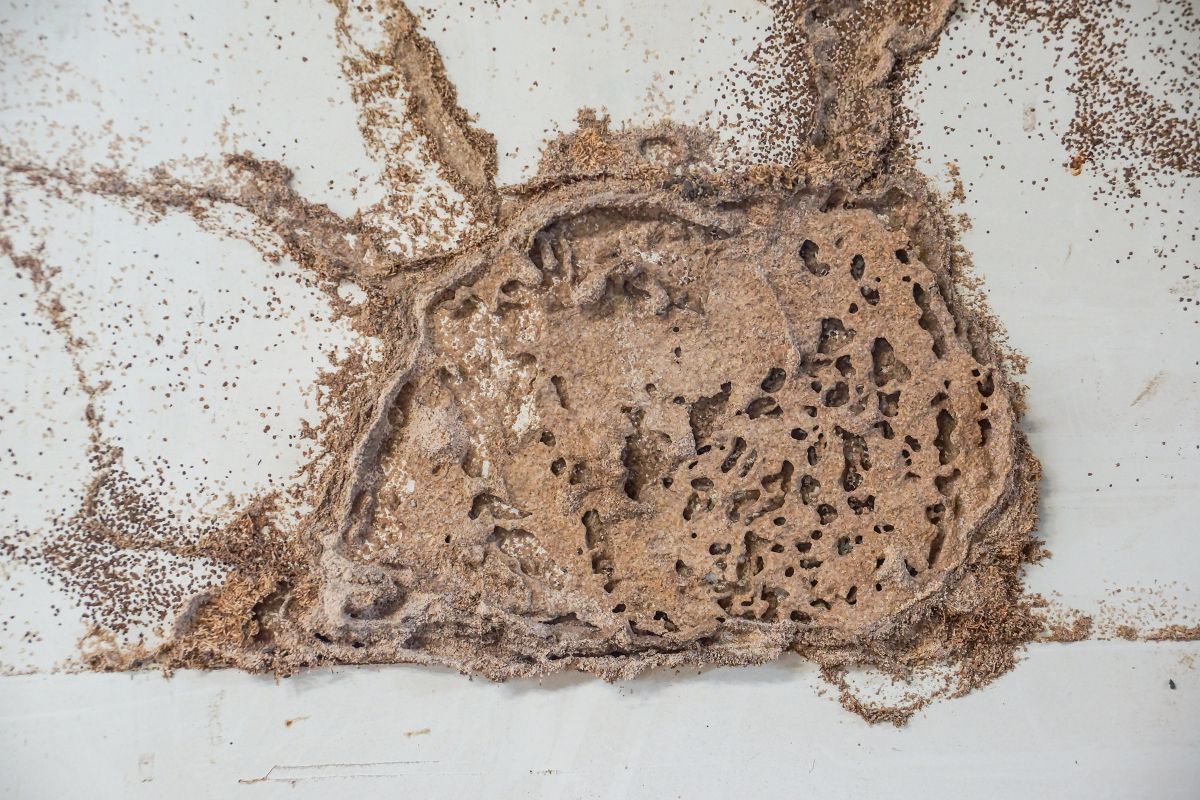
This is one of the most reliable signs of termites, specifically the subterranean variety. Subterranean termites live in the soil and need to travel back and forth between their underground colony and the wood they’re eating. To do that safely, they build narrow tunnels made of soil, saliva, and termite droppings. These are called mud tubes, and they typically appear along your home’s foundation, on exterior walls, inside crawl spaces, and sometimes along interior baseboards.
They look like thin, brown pencil-width lines running up a vertical surface. If you break one open and see live termites inside, you have an active infestation. Even if the tube looks dry and empty, a professional should still assess it because the colony may have simply relocated deeper into the structure.
If you spot anything resembling mud tubes around your property, the right move is to schedule a professional termite inspection before the damage spreads further.
Termites eat wood from the inside out. They consume the soft inner layers while leaving a paper-thin outer shell intact, which is why an infested beam or baseboard can look perfectly fine from the outside. The tell is in the sound.
Knock on a wooden surface, whether it’s a wall, a floor joist, a baseboard, or a windowsill, and pay attention to what you hear. Solid, healthy wood sounds dense and dull. Wood that has been hollowed out by termites sounds thin and papery, almost like tapping on an empty cardboard box.
Run your knuckle along baseboards, door frames, and wooden trim throughout your home. If anything sounds off, don’t ignore it. That hollow sound often means a colony has been feeding there for a significant amount of time.
Once a termite colony matures, it produces swarmers. These are winged reproductive termites whose job is to fly out, find a mate, and start a new colony somewhere nearby. The swarm itself is brief, often just a few minutes, but the aftermath is easy to spot.
After mating, swarmers shed their wings immediately. You’ll find small piles of translucent, equal-length wings near windowsills, door frames, sliding glass doors, or any light source they were drawn to. These piles can look almost like tiny fish scales scattered across a floor or sill.
Finding discarded wings indoors is a serious warning sign. It means a mature, well-established colony is either inside your home or very close to it. This isn’t something to watch and wait on.
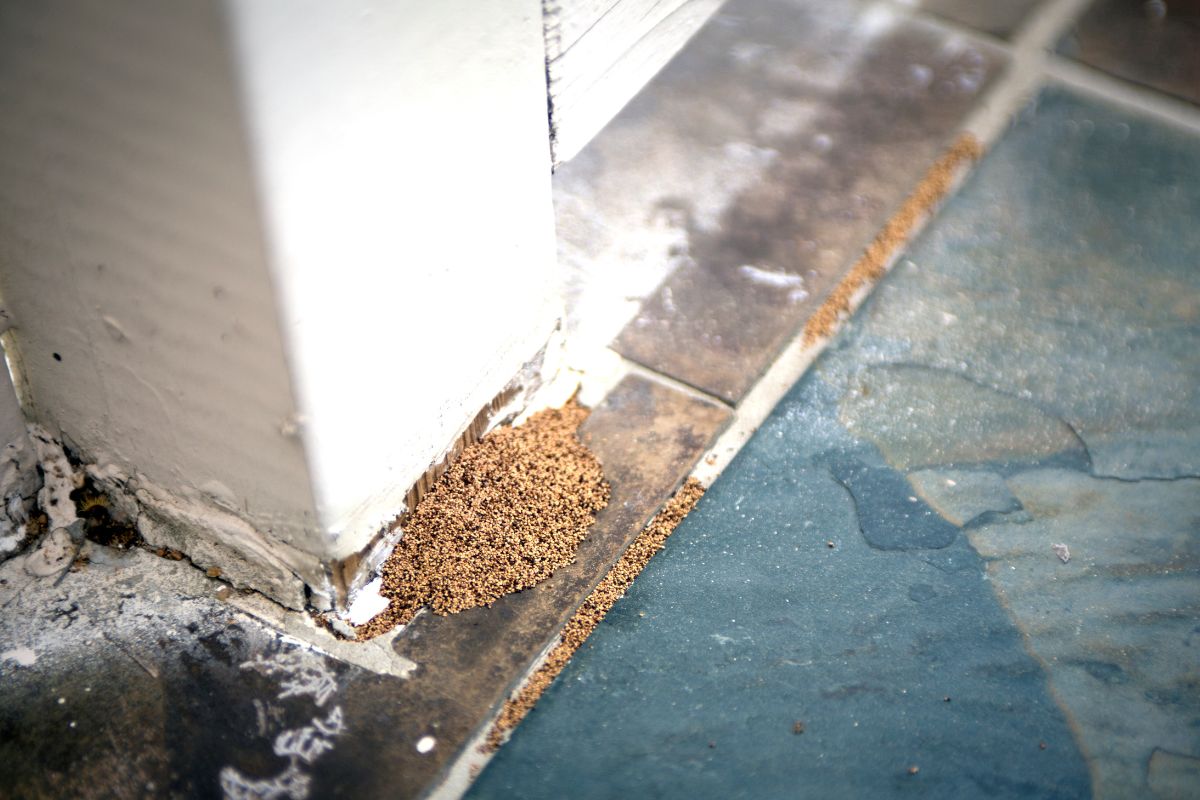
If you have drywood termites rather than subterranean termites, the signature sign is something called frass. Drywood termites create small kick-out holes in wood surfaces and push their droppings out through them. The frass accumulates in small piles that look almost like sawdust or tiny coffee grounds, usually directly below the kick-out hole.
The color of the frass depends on what type of wood the termites are eating, so it can range from light tan to dark brown. You might find it on windowsills, on furniture, on hardwood floors, or along baseboards. It’s easy to sweep up and forget about, which is exactly why so many homeowners miss the significance of it.
If you’re finding unexplained dust-like piles around your home and you can’t trace them to a clear source, consider the possibility that it’s termite frass before you write it off as regular household dust.
This one surprises a lot of homeowners because it’s so easy to mistake for a moisture problem. When termites tunnel just beneath the surface of drywall or wood paneling, they create conditions that cause the paint above to bubble, blister, or peel in a way that mimics water damage.
The reason this happens is that termites introduce moisture into the wood as they eat and travel through it. That trapped moisture pushes up against the paint layer, causing it to lift away from the surface.
If you’re seeing paint that’s bubbling or blistering in areas that have no obvious water source nearby, and especially if it’s paired with any of the other signs on this list, you should treat it as a possible termite indicator rather than a routine painting issue.
This one seems unrelated to pests at first glance, but it’s actually a documented sign of termite activity. As termites eat through the wood in door frames and window frames, and as the moisture they introduce warps the surrounding wood, doors and windows that used to open smoothly can start to stick or feel unusually tight.
Homeowners often chalk this up to seasonal changes in humidity or the house settling. While those explanations can be valid, they’re worth questioning if the problem developed relatively quickly or if it’s accompanied by any of the other warning signs covered here.
When subterranean termites move up through the soil and into the structural wood below your floors or inside your ceiling joists, the damage can eventually become visible through sagging or soft spots. A floor that gives a little too much when you walk across it, or a ceiling that seems to be pulling away from the wall, can both point to compromised structural wood underneath.
This level of damage typically means the infestation has been ongoing for a significant period. At this stage, you’re likely looking at both termite treatment and structural wood repair. The sooner you act, the less extensive the repair work will need to be.
Southern California’s climate gives termites nearly ideal conditions year-round. In Garden Grove specifically, the combination of warm temperatures, older housing stock, and the loamy soils common to the 92840 and 92843 zip codes creates elevated risk. Here are the areas of your home that deserve the closest attention:
Post-WWII tract homes, which make up a large portion of Garden Grove’s housing stock, tend to have wood framing styles that are particularly vulnerable to drywood termite colonies establishing in the attic space. If your home was built before 1980, annual visual checks of these areas are a smart habit.
If you’ve noticed one or more of these indicators in your home, the worst thing you can do is wait. Termite colonies don’t pause. They continue eating through your home’s structure every single day, and the cost of repairs grows with every week the infestation goes untreated.
The smart first step is a professional termite inspection. At MEC Termite & Pest Control, we’ve been conducting thorough inspections for Garden Grove homeowners for over 27 years. Our licensed technicians examine your foundation, attic, crawl spaces, and exterior perimeter to identify not just active infestations but also early warning signs that haven’t yet caused visible damage.
We offer free inspections and estimates for homeowners in the Garden Grove area. If we find evidence of termites, we’ll walk you through the best treatment option for your specific situation, whether that’s a localized spot treatment, a soil barrier, or a full fumigation for widespread colonies.
You can also learn more about our full range of termite and pest control services to understand what a complete treatment and prevention plan looks like.
Don’t wait until you’re looking at structural repairs that could have been avoided. If you’ve spotted any of the signs described above, or if you simply haven’t had a professional inspection in the past year or two, now is the right time.
Call MEC Termite & Pest Control at 714-951-4015 or contact us online to schedule your free termite inspection. Our Garden Grove team is ready to help.